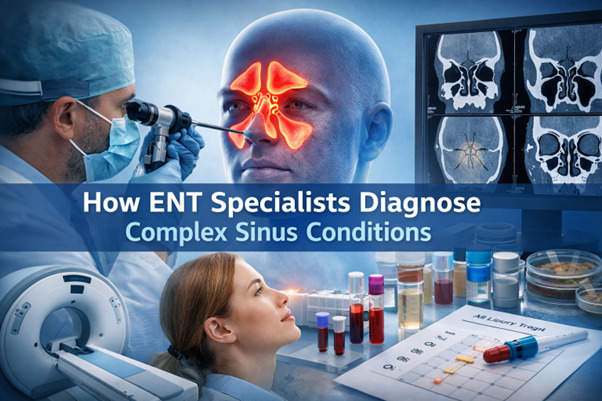
Introduction to Advanced Sinus Diagnosis by ENT Specialists
Sinus problems are common, but complex sinus conditions are not always straightforward to diagnose. Many patients assume that persistent congestion or facial pressure is simply a stubborn cold, only to discover that the underlying issue is far more intricate.
As an ENT doctor, I often see individuals who have tried multiple medications without lasting relief. The key to effective treatment is not guesswork, but a structured and evidence-based diagnostic process.
Understanding how ENT specialists diagnose complex sinus conditions helps patients appreciate why thorough evaluation matters before any long-term treatment plan is made.
Clinical History and Symptom Assessment
Detailed Symptom Interview
Diagnosis always begins with listening. A detailed history provides essential clues about whether symptoms are acute, recurrent, or chronic.
Chronic sinusitis is defined by symptoms that persist for 12 weeks or longer despite treatment. Patients commonly report nasal blockage, thick nasal discharge, facial pressure, post-nasal drip, and reduced sense of smell.
We also explore whether symptoms are constant or fluctuate, whether one or both sides of the nose are affected, and whether pain worsens with bending forward.
Associated Conditions and Triggers
Complex sinus conditions are rarely isolated. Many patients have underlying allergies, asthma, nasal polyps, or environmental sensitivities that contribute to ongoing inflammation.
A careful history also includes occupational exposure, smoking history, previous nasal trauma, and family history of sinus disease. These factors can significantly influence both diagnosis and management decisions.
In some cases, immune system concerns or frequent infections elsewhere in the body may suggest a deeper systemic issue requiring further investigation.
Previous Treatment and Response
Understanding what has already been tried is critical. Has the patient used nasal steroid sprays correctly and consistently? Did antibiotics provide temporary relief or no improvement at all?
A short-lived response to medication may suggest bacterial involvement, whereas persistent symptoms despite adequate therapy often point towards structural obstruction or chronic inflammatory disease.
This information allows us to determine whether we are dealing with treatment resistance, misdiagnosis, or a more complex sinus pathology.
Physical Examination
Anterior Rhinoscopy
The initial examination begins in the clinic using a headlight and a nasal speculum. This allows us to assess the front portion of the nasal cavity for obvious swelling, discharge, crusting, or septal deviation.
While helpful, this method only reveals limited areas of the nasal passages. Many sinus openings lie deeper and cannot be fully evaluated with simple visual inspection alone.
For complex cases, further examination is necessary.
Nasal Endoscopy
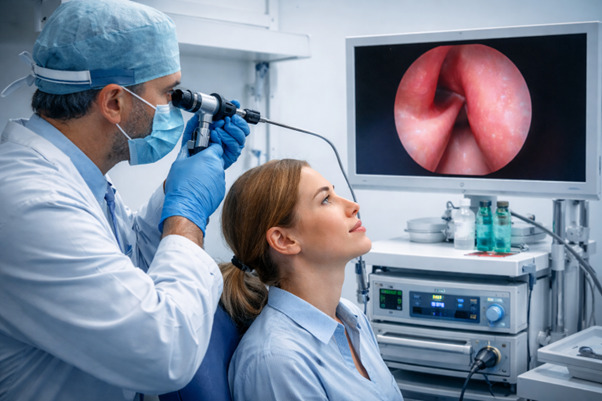
Nasal endoscopy is one of the most important diagnostic tools in modern ENT practice. Using a thin, flexible, or rigid camera, we can directly visualise deeper nasal structures and sinus drainage pathways.
This procedure allows us to detect nasal polyps, pus draining from specific sinus openings, mucosal swelling, anatomical narrowing, and structural abnormalities such as enlarged turbinates.
For patients seeking care from an ent specialist in Singapore, nasal endoscopy often provides immediate and valuable insight that guides further testing.
The procedure is performed in the clinic under topical anaesthesia and is generally well tolerated. It provides objective evidence that supports or refutes the diagnosis of chronic sinus disease.
Objective Diagnostic Testing
Imaging Studies
Computed Tomography (CT) Scan
When symptoms are persistent or surgery is being considered, a CT scan of the paranasal sinuses is the gold standard imaging study.
CT imaging provides detailed views of sinus anatomy, allowing us to see mucosal thickening, blocked sinus openings, air-fluid levels, bone changes, and anatomical variations.
Importantly, CT scans help differentiate between inflammatory disease and structural obstruction, which may require very different treatment approaches.
CT findings must always be interpreted alongside clinical symptoms. Many individuals may show mild sinus changes on imaging without having significant symptoms, so correlation is essential.
Magnetic Resonance Imaging (MRI)
MRI is not routinely required for typical sinusitis. However, it becomes valuable when we suspect complications, unusual infections such as fungal disease, or rare tumours involving the sinus cavities.
MRI provides superior soft tissue detail compared to CT and helps assess areas near the eyes and brain when necessary.
Its use is selective and guided by specific clinical concerns rather than routine screening.
Allergy Testing
Allergic rhinitis is a common contributor to chronic sinus inflammation. If the history suggests seasonal or environmental triggers, allergy testing may be recommended.
Skin prick testing or specific blood tests can identify allergens such as dust mites, mould, pollen, or animal dander.
Identifying these triggers allows targeted management strategies, including environmental control and immunotherapy, which may significantly reduce sinus flare-ups.
Microbiological Assessment
Not all sinus infections are caused by the same organisms. In selected cases, especially when infections are recurrent or resistant to antibiotics, obtaining a culture sample during nasal endoscopy may be appropriate.
This allows identification of the specific bacteria involved and ensures that antibiotics, if needed, are appropriately targeted.
Blind antibiotic use without culture guidance can contribute to resistance and ineffective treatment.
Blood Tests and Immune Evaluation
When sinus infections are unusually frequent or severe, we may investigate underlying immune function.
Basic blood tests can assess white blood cell levels and markers of inflammation. In certain patients, additional immunological screening may be required to rule out deficiencies that predispose them to recurrent infections.
Such investigations are not routine for every patient but are crucial in complex or atypical cases.
Specialised Diagnostic Considerations

Differentiating from Other Conditions
Facial pain does not always originate from the sinuses. Migraines, tension headaches, dental infections, temporomandibular joint disorders, and neuralgias can mimic sinus pressure.
A careful assessment helps distinguish sinus-related discomfort from other causes, preventing unnecessary sinus treatments.
Objective evidence from endoscopy and imaging is especially important when symptoms are non-specific.
Assessing Structural Factors
Anatomical variations such as a deviated septum, concha bullosa, or narrow sinus drainage pathways can impair ventilation and drainage.
While these variations are common, they only become clinically significant when associated with symptoms and inflammation.
CT imaging combined with endoscopic findings allows us to determine whether structural correction may be beneficial.
Integrating the Diagnosis
Correlating Symptoms with Findings
Diagnosis of complex sinus conditions requires integration of multiple components. Symptoms alone are insufficient, and imaging alone can be misleading.
Chronic sinusitis is confirmed when persistent symptoms align with objective evidence of inflammation seen on endoscopy or CT scan.
This combination ensures that treatment decisions are evidence-based rather than speculative.
Classification and Severity Assessment
Sinus disease is not uniform. Some patients have chronic rhinosinusitis without nasal polyps, while others develop extensive polyps causing significant blockage and loss of smell.
Severity assessment helps determine whether medical therapy alone is appropriate or whether surgical intervention should be considered.
For individuals consulting a sinus specialist singapore, this classification ensures a personalised and structured treatment pathway.
Communicating the Diagnostic Outcome
Explaining Findings Clearly
Once the evaluation is complete, it is essential to explain findings in clear and understandable language. Patients should know whether their symptoms stem from inflammation, allergy, structural narrowing, or infection.
Visual aids from endoscopy or imaging can help patients understand what is happening inside their sinuses.
This transparency builds trust and improves treatment adherence.
Shared Decision-Making
Diagnosis is only the beginning. Management decisions are made collaboratively, considering symptom severity, lifestyle impact, and patient preferences.
Some patients respond well to medical therapy alone, including saline irrigation and intranasal corticosteroids. Others with persistent obstruction or polyps may benefit from minimally invasive sinus surgery.
A structured diagnostic approach ensures that treatment is targeted, appropriate, and evidence-based.
Conclusion
Complex sinus conditions require more than a simple prescription. Accurate diagnosis depends on a thorough history, careful examination, nasal endoscopy, and when necessary, detailed imaging.
By combining these elements, ENT specialists can distinguish between inflammatory disease, infection, allergy, and structural obstruction. This comprehensive evaluation prevents misdiagnosis and ensures that patients receive the most appropriate care.
If sinus symptoms persist, worsen, or repeatedly return despite treatment, visit earnosethroat.com.sg to book an appointment for an expert assessment. A methodical diagnostic process lays the foundation for lasting relief and improved quality of life.